Once upon a time, Books began this Way—the O of once let The reader beware up Front that a story as Ornate and colorful as We are would follow— And not for any of us To be shocked to find We must return and Stand for what we are.
Like a woman in Vermeer, she ironed by the kitchen window, blue towel turbaned about wet hair, three-quarters of her face suffused in sun. From the cellar doorway I called to her, unwilling to descend those nightmare stairs alone, unable to compel her
to join me. Mother gazed out at the sky. Ignored the televised warnings. With terrifying calm, flapped a shirt and spread it flat. Strange about beauty, how it lives on the best of terms next door to nothingness: if a twister came
she wanted to see it. If I could paint that 1950s scene where nothing finally happened, I'd have to crush her best pearl and blend the powder in my palette— how else catch that kitchen's luster? A tiny wisp of vapor to suggest the hiss
as the white shirt's pressed and the silvery iron becomes a curved mirror in which a boy is captured and diminished as he calls. Or perhaps I'd leave myself out, let that glossy surface reflect only the blue plume spiraling up (she sometimes smoked while Father traveled).
As in a waking dream, the iron glides down a sleeve and there's no tornado, only warnings and warm sun on a young woman's cheek and shoulder, only the way the ordinary light of morning ravishes her as she stares off at something beyond the frame.
please note: art, not by Vermeer, but by Edgar Degas, Woman Ironing Against the Light
"I hate dancers. Well, I don't really hate them, but they're not musicians. They just count beats, oblivious to the music. They wouldn't know a theme if it bit them. They're arithmetician-athletes."
We're sitting, cooling off, after racquetball, and I've asked the principal flutist of the New York City Ballet Orchestra, Paul Dunkel, to solo in words, to talk about his work.
"Musicians are there to serve the music, not vice-versa, as with dancers. Think of us as the composer's lawyers, and our job's to put forward for our client the best possible case. "But playing for dancers we're little more than drummers in a circus, just there to highlight with sound the dog whose trick it is to run and jump through a flaming hoop: drumroll, rimshot.
"Likewise, some composers think they're tailors, writing to order. They make the music fit the dancing. Four extra steps? Then add two bars. I call that music-as-Armani-suit.
"The truth is dancers and musicians live in two different worlds. They're like passengers and pilots on an airplane, and the conductor's the steward who talks to them both and connects the dots.
"But Balanchine combined those two worlds with ease. Russian-trained dancers learn music, and Mr. B. played both viola and piano, would get ideas at the keyboard for his choreography.
"My girlfriend used to dance, and when we go to dance performances we disagree on everything. She'll say the music's too slow, I'll say the dancers are too fast; I see
"with my ears, she hears with her eyes. Or I'll say a female dancer's too thin, and she'll say not. But one thing we agree on: in his heyday, Edward Vilella was just right; that is, hot.
"A guy's guy. Tough. I never heard Eddie whine. He boxed—and learned fast footwork in the ring. Was always revved, a Harley-Davidson. Just did his work; let his feet do the talking."
"Vilella could be one of Whitman' s roughs," I say, and imagine the poet's ghost, eyes wide, front row, watching the dancer do his stuff while partnering Patricia McBride in Rubies.
"Walt leaned and loafed, didn't he? Like the faun. In fact, we're rehearsing Afternoon today. Setting the tempo's the catch. The dancers want one, the musicians want another. They'll win, we'll play.
"Speaking of time ... " He stands to check the clock. "Those games were long. I'm late. And outta here." He waves, heads down the hall, then stops, turns back and adds a coda before he disappears:
'I'm titling my memoir Dancing On My Head. That sums up playing for dancers in the pit. Once, I didn't recognize a dancer who said she knew me. I told her, 'Let me see your feet.'"
Clear now of our long struggle I can hear your voice, its strength the sweet coldness of river water. And I can see you as in the photograph with your father and sister, tall pretty girl, pigtailed and freckled,
led, misled, until you doubted your beauty, body, that you were one among us, a person, like any other.
And, given distance, I think of you becoming smaller, but cheerful, the way the old are
with short white hair and an easiness you'd never know before, and me, incredibly, not there.
School began again here in CinCity on Tuesday. I continued to deny it for a couple of days because I was working, but today I have driving duty and my September-May routine slid automatically back into its groove.
I'll have to pay closer attention this year since one of these morning drives will be my last. I won't know it though until weeks or months later. HoneyHaired has her temps. She's working on her driving hours. Once she gets her license some crazy work schedule conflict will arise which will just make it simpler for her to drive to school and that will be that. I remember many days of driving CollegeGrrrl back and forth, up and down and round and round, but I had no inkling that it would end so suddenly and so completely. Even as I write this I know I won't realize it this year either for that is the nature of baby birds leaving the nest.
So, I will strive to follow the words of wise men and yogis far and wide to BE PRESENT, and to pay attention, because, you know, “It’s tough to make predictions, especially about the future.”--Yogi Berra
please note: art by Patrick Glover
To A High School Senior by Pat Schneider
Don't go. Don't stay. Daughter. Morning after afternoon the last year slips away.
Singing all the old songs, you will go (ambivalence of moon, certainty of sun) we know
only half of what we are. The earth is earth to us, star perhaps
if apprehended far enough away. Daughter – don't go. Don't stay.
It's easy to believe you can go back Whenever you desire, jump in the car And drive, arrive at dusk—the hour You recall most vividly—and walk Among the buildings spread across the farm, Out toward the pastures, woods, and fields. There is music in the leaves, in the dense Columns of green corn. The wind lays down The tune. You can play it, too, simply By walking with eyes closed, arms Stretched out, lightly striking the stalks. Who wouldn't desire, like the children Lost in so many similar fields, To sit down on the turned earth and drift Away on the rhythms of his own First possible death? Rescuing Voices come closer, veer off. Flashlight beams Strobe over your head. You do not care. Each building you remember—hen house, Sheep shed, corn crib, barn—caved in upon itself, The walls and roofs collapsing with a final Percussive clap, since you last walked those fields. No one you will ever know works that land now. It is as green as Eden. Life rises in the roots, in the leaves.
I suspect there will come a day not too far in the near future when I shall be sick of rain and dark dreary days. It t'ain't today, though. The heat wave is in full bloom and the weathermen keep promising a break to the high temperatures "Sunday and the beginning of next week...," but they are bloody, bloody liars sipping lattes in air-conditioned comfort. I think I might actually hate them.
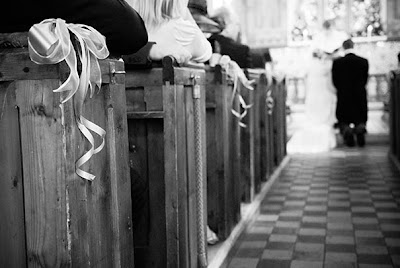
I have a wedding to attend this evening. A joyful occasion for those of us who love the bride and love to see her happy. While searching for just the perfect visual aide I came across this photo from blueridgeblog. The photo and the blog are both too delicious to not share...
A Wedding Poem by Thomas R. Smith
Bright faces surround the woman in white, the man in black, the sweetness of their attention to each other a shine rising toward the high ceiling. The men watch the groom, and the women the bride, as they speak their candle-lit vows, as if there were something in it for us personally.
Worn by the distances we the already-married have traveled down the road on which these two are setting out, we leave the dust of the journey outside the door of this house where tonight no word is casual, no posture undignified, and each becomes again handsome in them, beautiful in them.
please note: first photo by Robert Kruh, hummingbird by blueridgeblog
Do you remember still the falling stars that like swift horses through the heavens raced and suddenly leaped across the hurdles of our wishes--do you recall? And we did make so many! For there were countless numbers of stars: each time we looked above we were astounded by the swiftness of their daring play, while in our hearts we felt safe and secure watching these brilliant bodies disintegrate, knowing somehow we had survived their fall.
It could have happened. It had to happen. It happened earlier. Later. Closer. Farther away. It happened, but not to you.
You survived because you were the first. You survived because you were the last. Because alone. Because the others. Because on the left. Because on the right. Because it was raining. Because it was sunny. Because a shadow fell.
Luckily there was a forest. Luckily there were no trees. Luckily a rail, a hook, a beam, a brake, a frame, a turn, an inch, a second. Luckily a straw was floating on the water.
Thanks to, thus, in spite of, and yet. What would have happened if a hand, a leg, One step, a hair away—
So you are here? Straight from that moment still suspended? The net’s mesh was right, but you—through the mesh? I can’t stop wondering at it, can’t be silent enough. Listen, how your heart is beating in me.
Our neighbor died this week. Truth be told, I didn't really like him all that much. He was a bit rude, perhaps just socially inept, but enough times and in just the right spots to be hurtful. The couple's about 15 years older than we are. Too old to be similiar to older siblings, not quite old enough to be the next generation, but not Baby Boomers either. Who knows...maybe we're those pesky younger cousins coming in to disrupt the status quo of the street.
But lately, when his wife would see me walking the dog or in the grocery store she had questions about his chemotherapy and gave me the latest numbers on hemoglobin and hematocrit, platelet counts, number of units of packed red blood cells, and corresponding blood pressures. She confided she was ready for hospice, but he wasn't. And unasked, but clearly standing right next to us, how long do we have?
Hubby and I went in when asked with wheelchair assistance and that last evening to help position his head to ease his breathing. It wasn't till his eulogy that I had any knowledge of this gentleman's history. His barfight at seven in the morning during the early 1950's and a subsequent visit to a New Orlean's jail till he could come up with two hundred dollars. His sister-in-law's delight in being "always treated like a lady" by him, constantly opening doors for her, bringing food to her. His wife bought him flying lessons as a gift, because "he wasn't a very good driver, too distracted. I thought this would be good for him." He didn't enjoy music, unabashedly slept during the symphonies, but had a soft spot for musical theater.
He was a guru to my hubby and some of the other men on the street because he always had a home project going on, ones that were usually considered very impractical by the neighborhood wives, but by God, he was going to have them done.
His favorite song was the postlude at his memorial service. I don't believe I'll ever hear it quite the same way again.
They Sit Together on the Porch
by Wendell Berry
They sit together on the porch, the dark Almost fallen, the house behind them dark. Their supper done with, they have washed and dried The dishes--only two plates now, two glasses, Two knives, two forks, two spoons--small work for two. She sits with her hands folded in her lap, At rest. He smokes his pipe. They do not speak, And when they speak at last it is to say What each one knows the other knows. They have One mind between them, now, that finally For all its knowing will not exactly know Which one goes first through the dark doorway, bidding Goodnight, and which sits on a while alone.
please note: photo by CheyAnne Sexton, newmexicomtngirl on Flickr
In the heat, in the high grass their knees touched as they sat crosslegged facing each other, a lightness and a brittleness in their bodies. They touched like shells. How odd
that I should watch them say goodbye. What did it have to do with me?
There was my own stillness and the wasps and the tiny flies for a long time taking stitches in the surrounding air and
a comfort I felt, as the wind tore through, to find the trees miraculously regaining their balance.
First, grant me my sense of history: I did it for posterity, for kindergarten teachers and a clear moral: Little girls shouldn't wander off in search of strange flowers, and they mustn't speak to strangers.
And then grant me my generous sense of plot: Couldn't I have gobbled her up right there in the jungle? Why did I ask her where her grandma lived? As if I, a forest-dweller, didn't know of the cottage under the three oak trees and the old woman lived there all alone? As if I couldn't have swallowed her years before?
And you may call me the Big Bad Wolf, now my only reputation. But I was no child-molester though you'll agree she was pretty.
And the huntsman: Was I sleeping while he snipped my thick black fur and filled me with garbage and stones? I ran with that weight and fell down, simply so children could laugh at the noise of the stones cutting through my belly, at the garbage spilling out with a perfect sense of timing, just when the tale should have come to an end.